

Why use it
Are you recommended?
See whether AI engines name you when buyers ask for recommendations.
Who wins instead
Find out which brands AI names most often, and where you rank among them.
Which sources matter
See which websites and pages the engines cite, so you know where to be mentioned.
Trends over time
Notice when you start gaining (or losing) ground.
Where to find it
The AI visibility group in the sidebar has five items: Visibility, Prompts, AI answers, Citations and Sources. The same pages also appear as tabs across the top of each AI visibility page, together with Query fan-out.The overview
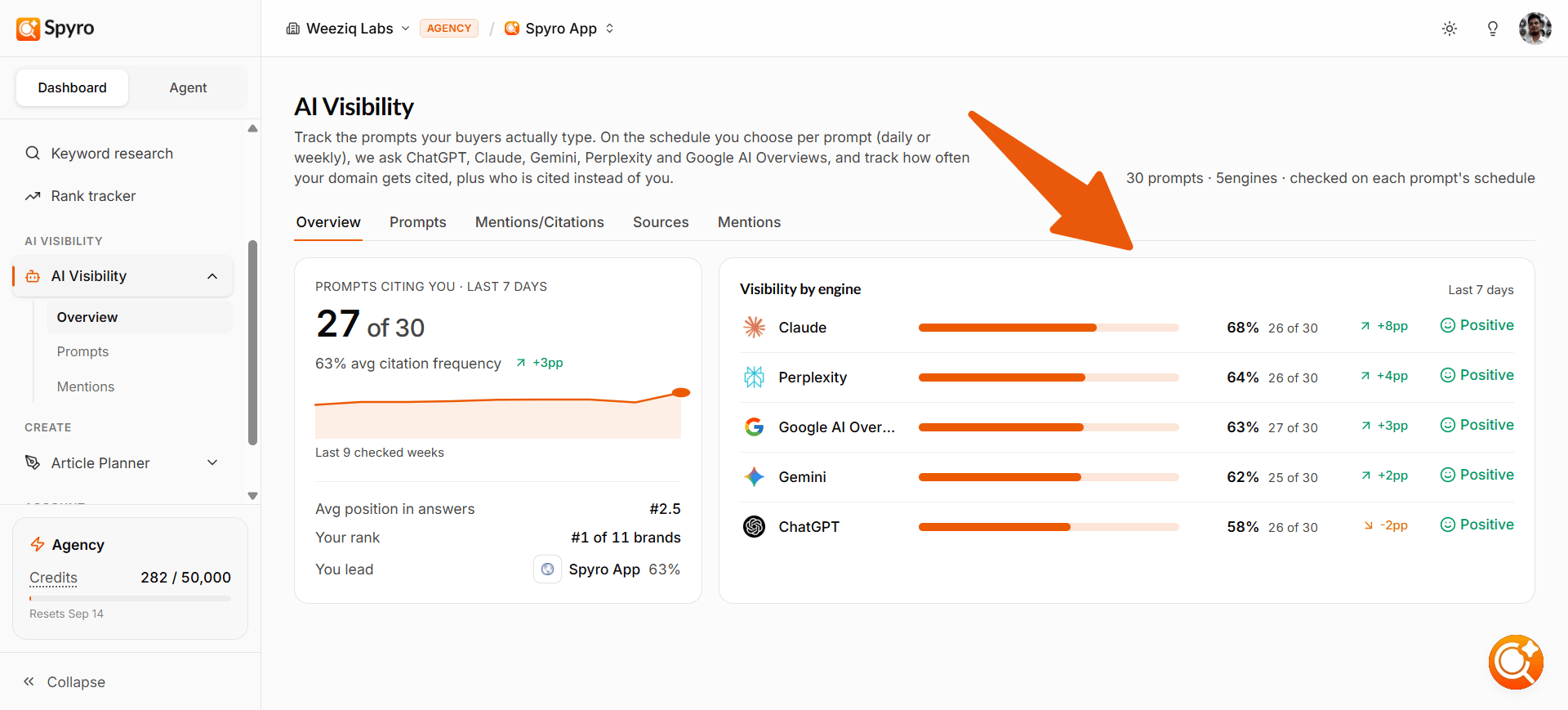
The Visibility page shows:- Your AI authority: an overall level (from Emerging to High AI Authority), your Share of Voice Rank among the brands named, and your Avg position when cited (1 means you were named first).
- Visibility by engine: a card for each engine with your visibility on it, how many of your prompts it cited you for (for example, “26 of 30 cited”), how many answers named you, the change since the previous period, and the tone of those mentions.
- Trends: how often you’re cited week by week, and how often answers link directly to your site.
- Sentiment: whether the answers that name you are positive, neutral or negative.
How you compare with competitors
Every brand the engines name in their answers counts toward the comparison.- Share of voice is your slice of all those brand mentions. If the engines name five brands and yours appears in a third of the answers, you have about a third of the share of voice.
- Because it’s relative, your share can rise when you’re named more often, or drop when a competitor surges ahead, even if your own mentions stayed the same.
Citations
The Citations page focuses on how often you’re named and linked:- Answers that named your brand, and answers that linked one of your pages, week by week.
- Decision journey: your mention rate at each stage of the buyer’s journey, across engines.
- Position distribution: where brands land in AI answers, so you can see whether you lead or trail the brands listed beside you.
- Top cited sources and Highest leverage right now: the sources that shape answers to your prompts.
Sources
The Sources page is an index of every site and page the engines cited for your prompts. You can search it, group it by domain, and filter it by AI engine and by source type, and see what kinds of content get cited most and how each domain’s citations are trending.Full page addresses are collected from new checks onwards. Checks from before this feature show the cited domain only.
Query fan-out
When an AI engine answers a question, it often runs its own web searches first. Query fan-out shows those searches for each of your tracked prompts, so you can see what the engines actually looked for. ChatGPT, Claude and Perplexity share their searches; Gemini and Google AI Overviews don’t.What to expect
- AI answers vary each time, so results are shown as rates across many checks, not a single yes or no.
- Each prompt is re-checked on its own schedule, weekly (Mondays) or daily, in your workspace’s time zone.
- Starter tracks ChatGPT and Google AI Overviews; Pro and Agency track all 5 engines.
- If you haven’t added any prompts yet, these pages are empty. Start by adding a few tracking prompts.
- If your prompts are paused or your plan lapses, your earlier results stay visible.
Tips
- Read this page with Tracking prompts to manage the questions, and AI mentions to read the actual answers.
- When a rival outranks you, find the prompts they win, then study those answers and the sources they cite.
Related
Tracking prompts
Manage the buyer questions Spyro AI asks the AI engines.
AI mentions
Read every answer and the exact snippet that names you.
Competitors
See where competitor information lives in Spyro AI.
AI writer
Create content that earns citations in AI answers.